Daisy's Musings · 28 May 2026
Iron, ferritin and the hair loss you may be experiencing
Daisy on ferritin, hair shedding, and the supplements + foods doing the actual work. The first entry of Daisy's Musings.
Fingers to keyboard. Blogging is back. To be honest it never really left, but more than ever a lot of us are returning to what made social media a dream back in the day. At least I am.
A bit of a backstory. I used to be big on Tumblr, and on Twitter when Twitter was Twitter. The whole point isn't to ruminate on what one used to be, but to look for ways to re-enact that feeling. And nothing makes me happier than introducing you to Daisy's Musings. Let's begin.
I brought back my brand, and over the course of May I shared an interesting relaunch rollout with everyone. Nothing makes me happier than knowing I built this all, and I still kind of have it. So let me be frank with you: this is not a hair blog. You may think, pick a niche. No, I won't. These are my candid thoughts, for posterity's sake, and honestly because I need to do it for myself. This is my world, and you're more than welcome to grab a seat.
So. Let's talk about hair falling out.
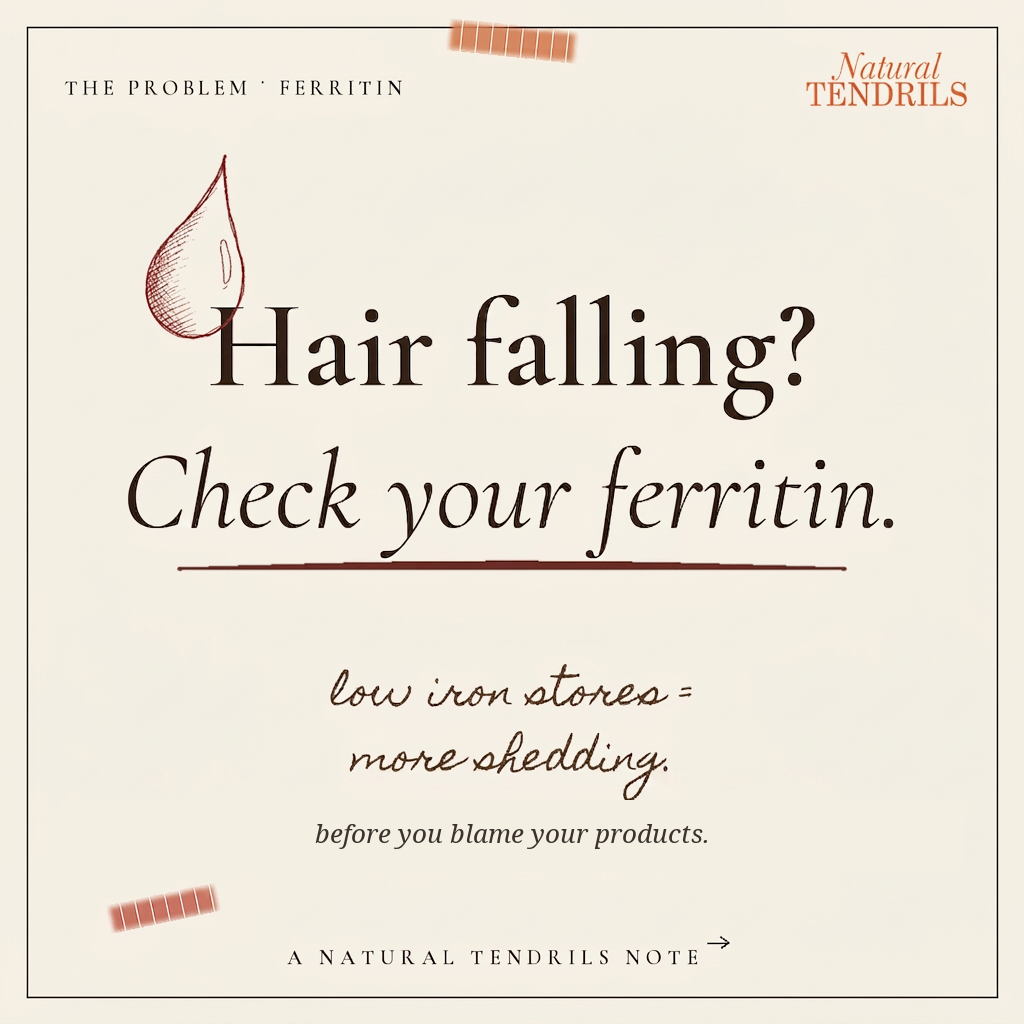
If your hair is shedding more than usual, your edges look thinner, and your wash days feel like a horror film, please check your ferritin before you check anything else. Ferritin is your body's iron store. Hair follicles are some of the most metabolically demanding cells you've got, and when iron runs low the body deprioritises them. The hair you would normally keep falls out three or four months later, and you spend the rest of the year blaming your products.
I'm not a doctor. I'm a girl who got her bloodwork done, looked at the numbers, and finally connected the shedding to something I could fix. This is what I've been doing.
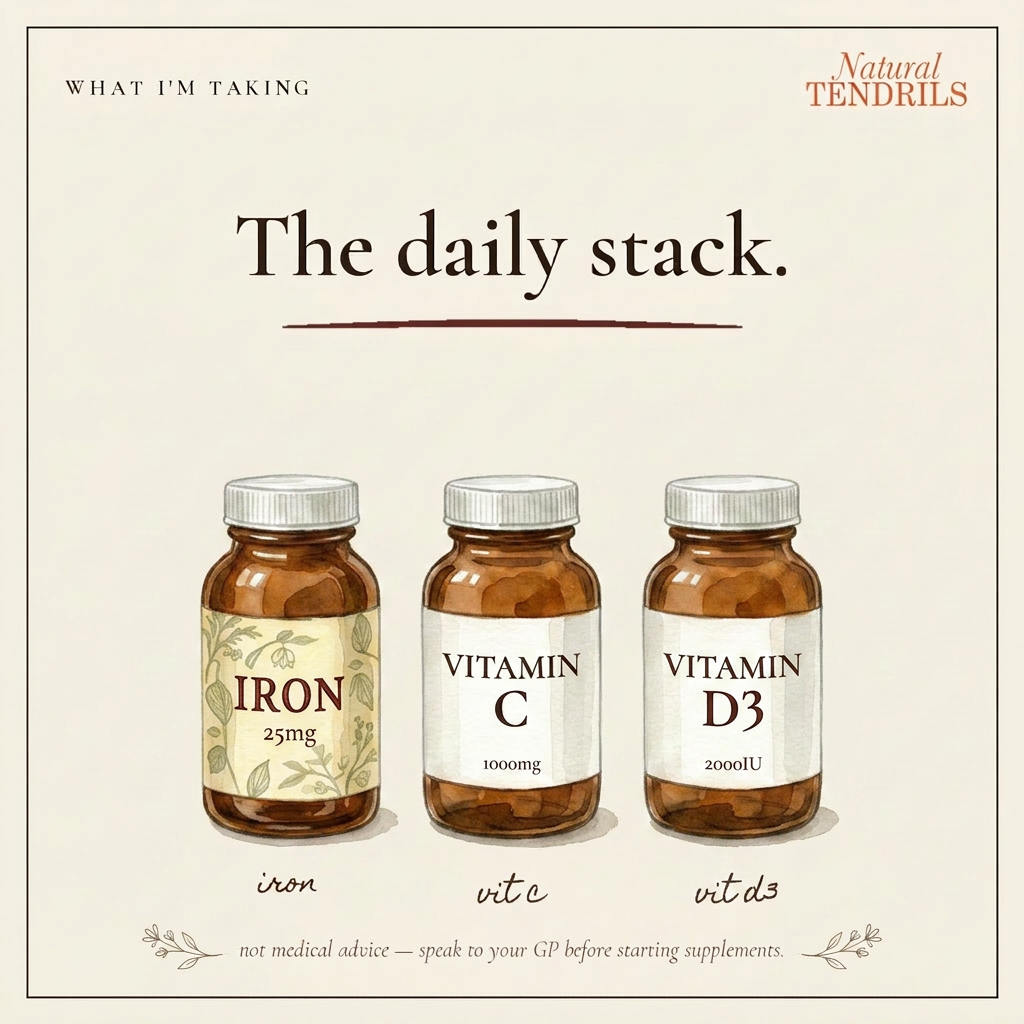
What I'm taking
An iron multivitamin with a gentle, slow-release iron form so it doesn't wreck my stomach.
Vitamin D3, because most of us in the diaspora are quietly running low and D3 plays a role in the hair growth cycle.
Vitamin C alongside the iron, because it can increase non-heme iron absorption by up to three times. This one is non-negotiable.
Please speak to your GP before you start any supplement. Iron in particular can build up if you don't actually need it.
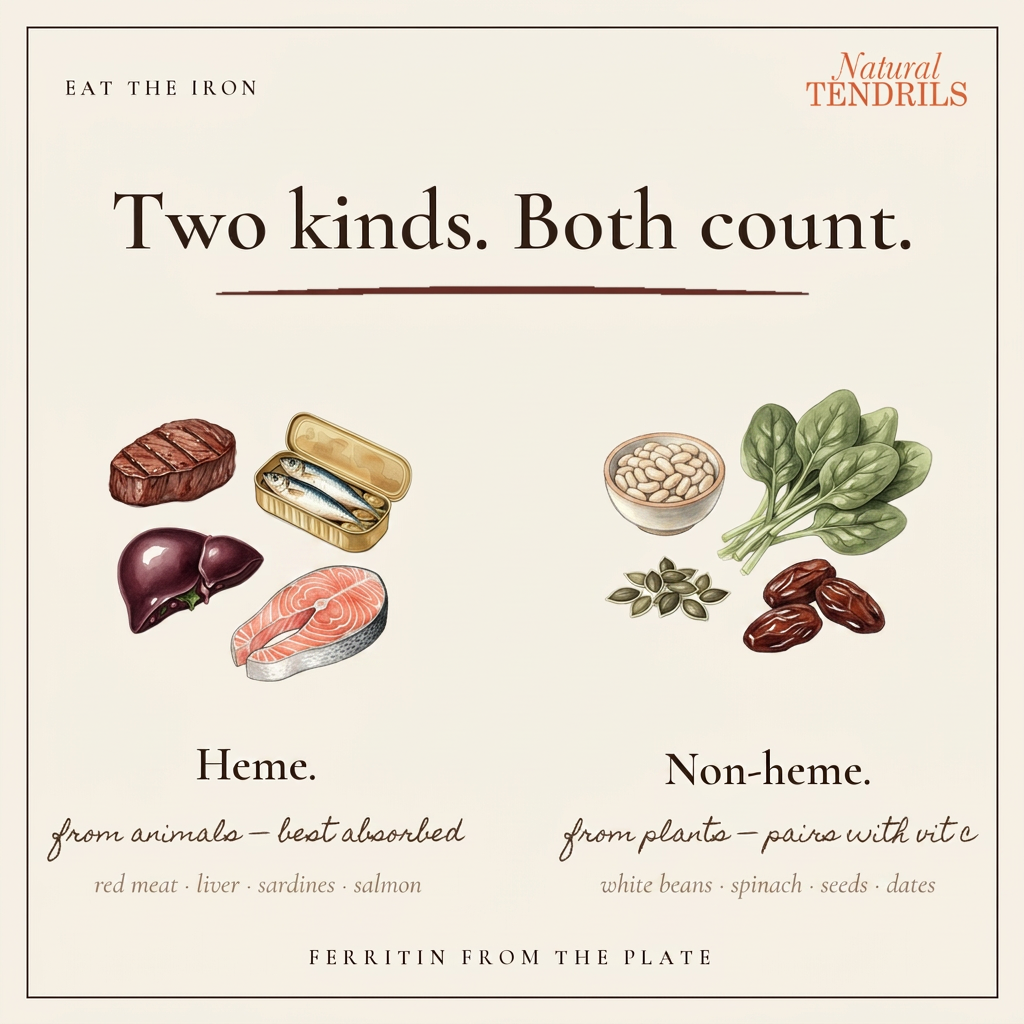
Eat the iron, don't just swallow it
Supplements are a top-up. Food is the foundation. There are two kinds of dietary iron and your body treats them differently.
Heme iron (from animals, absorbed easily): salmon, liver, beef, sardines, eggs.
Non-heme iron (from plants, needs a little help): white beans, spinach, ugu, pumpkin seeds, dates.
If you're Nigerian like me, you already eat half this list without thinking about it. The job is to be a little more intentional about it on the weeks your body is asking for more.
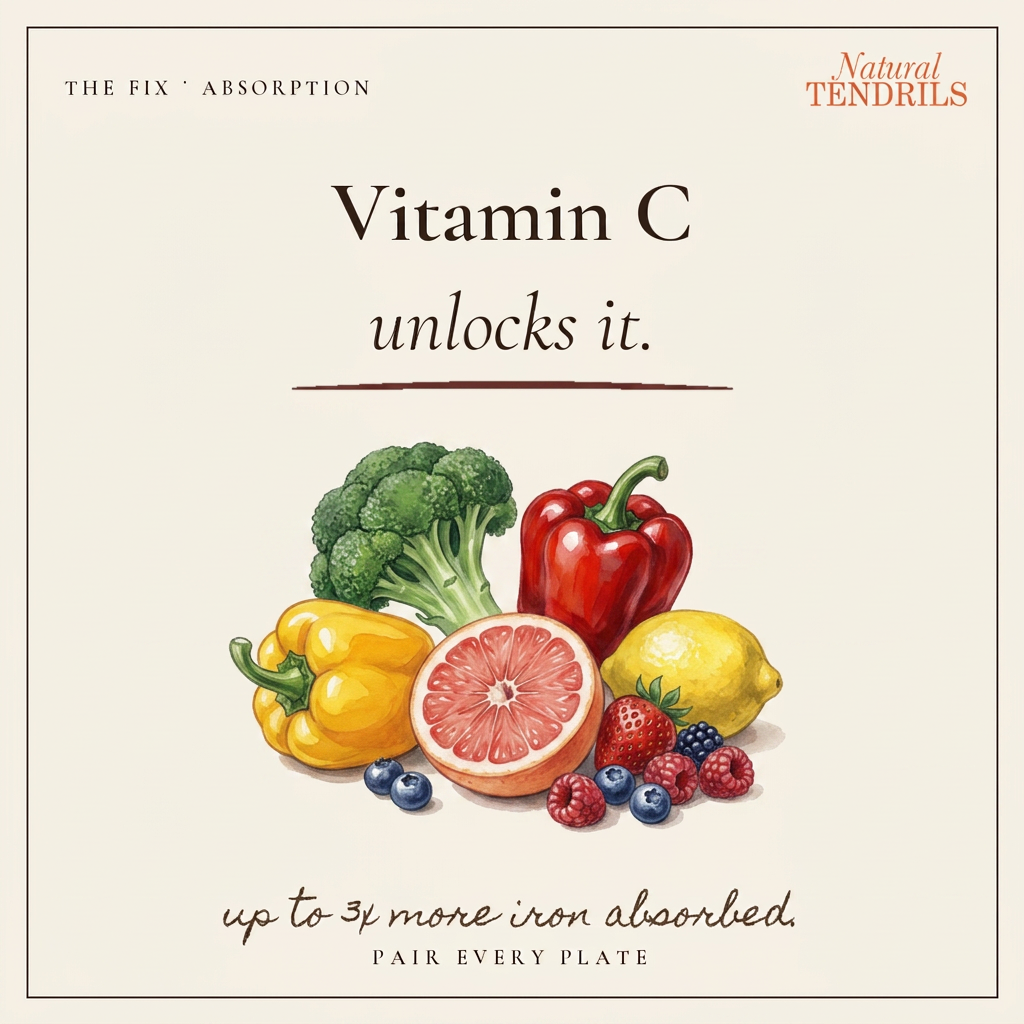
Vitamin C is the unlock
Non-heme iron on its own is shy. Pair it with vitamin C and absorption jumps. Practically that looks like:
Sautéed bell peppers paired with air-fried plantains, eggs and salmon.
An orange, tangerines or some strawberries after lunch.
A glass of orange juice with your iron supplement instead of tea.
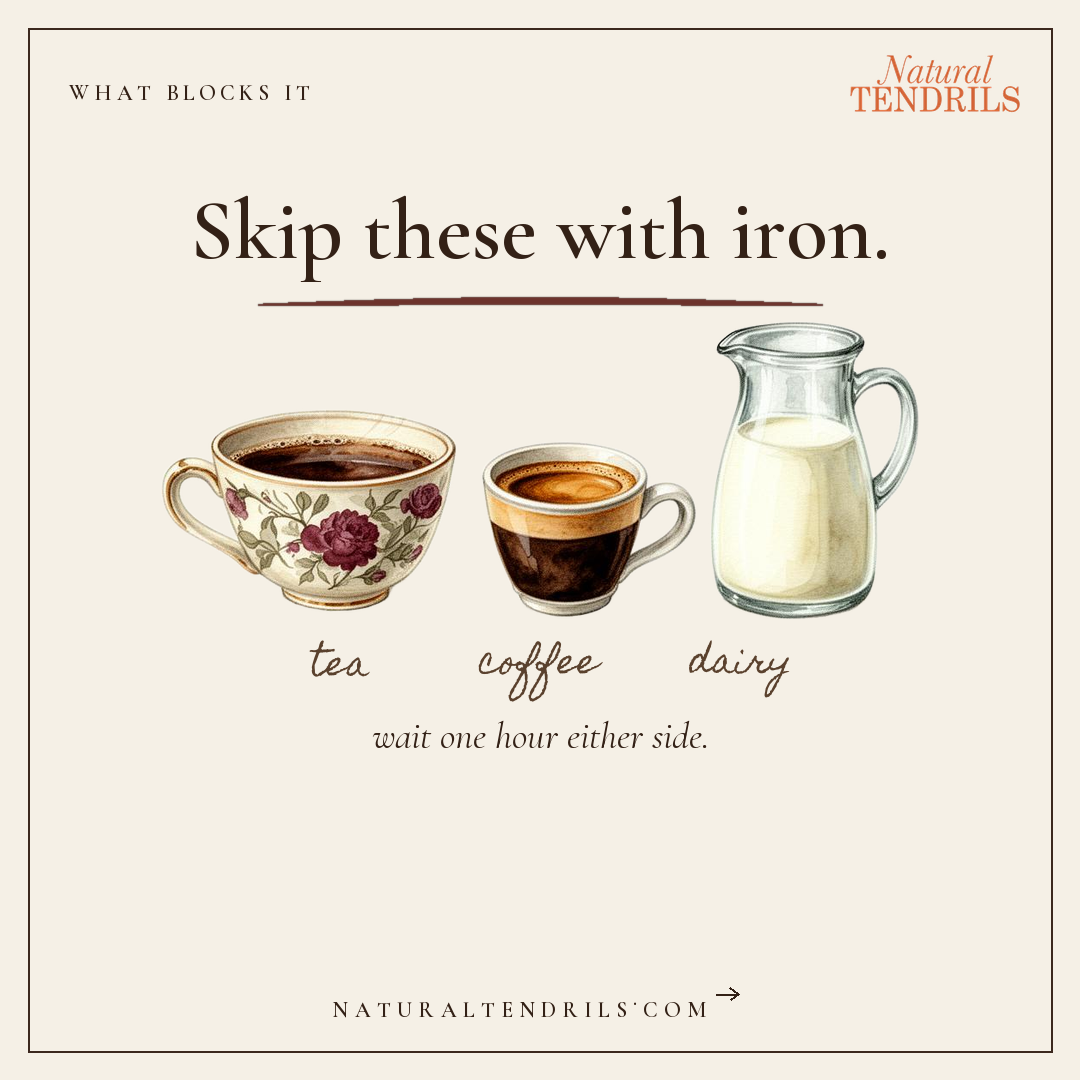
What blocks iron (and we keep doing it anyway)
Three of the most loved drinks in our culture are also the biggest iron blockers when you take them too close to an iron meal or supplement:
Tea (especially black tea), tannins bind to iron.
Coffee, same story.
Dairy, calcium competes with iron for absorption.
You don't have to give them up. Just give them a one-hour gap before and after your iron, and you'll get the benefit of both.
One more thing
If you take nothing else from this first entry, take this: your hair is a status report, treat it accordingly and improve upon. Before you spend another 50 pounds on a new oil or cream to combat hair fall, ask your GP for a full iron panel including ferritin. The cheapest hair fix you may ever make starts with getting checked.
I'll be back next week. Pull up your seat.
Love,
Daisy Dew